A former industrial site near Digbeth needed remediation before redevelopment. We found heavy metals and hydrocarbons in the shallow fill layer. Our team mobilised within 48 hours to start the investigation. We used a phased approach combining soil sampling, laboratory analysis, and risk assessment. The client needed a clear pathway to planning approval. We provided a validated remediation strategy backed by BS 5930 and CLR11 guidance. The work included delineation of contamination plumes and design of a soil capping system. Before any earthworks, we also carried out a drainage geotechnical assessment to understand groundwater flow patterns across the site.
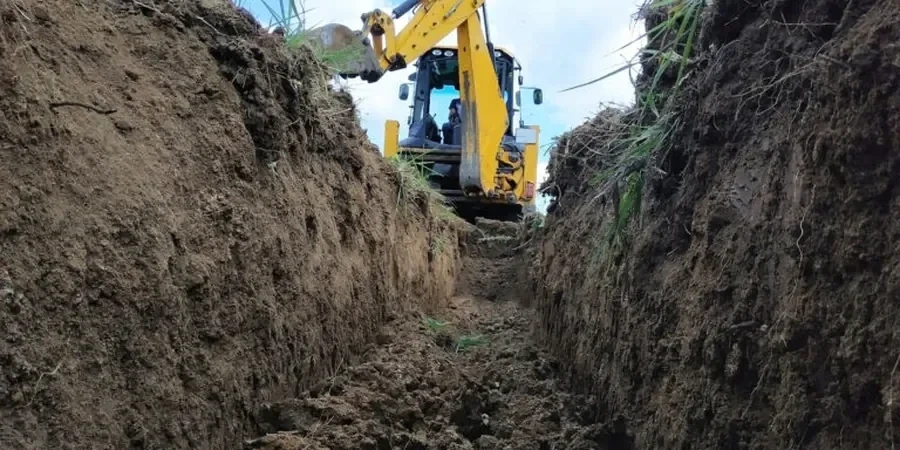
Birmingham sits on shallow groundwater and variable fill — contamination migration risk demands a phased, validated remediation strategy.
Scope of work in Birmingham
Critical ground factors in Birmingham
Birmingham expanded rapidly during the Industrial Revolution. Many former factories and foundries left behind ground contaminated with heavy metals, coal tars, and solvents. The historic canal network also acted as a conduit for pollution spread. Redevelopment pressure on these brownfield sites is high. Without proper contaminated soil remediation, long-term risks to human health and groundwater persist. The local geology of glacial till and river terrace deposits can trap contaminants, making them hard to remove. A solid site investigation is the only way to manage these liabilities effectively.
This service complements our laboratory testing work for a complete project analysis.
Our services
We offer two core contaminated soil remediation services tailored to Birmingham's brownfield conditions.
Site Investigation & Risk Assessment
Intrusive investigation with windowless sampling, trial pits, and boreholes. Laboratory analysis for priority contaminants. Quantitative risk assessment to derive site-specific target levels. Includes gas monitoring and groundwater assessment.
Remediation Design & Verification
Design of soil capping, bioremediation, or soil washing solutions. Implementation supervision and validation sampling. Production of a verification report for regulatory sign-off. Waste classification for off-site disposal if needed.
Q&A
What is the typical cost range for contaminated soil remediation in Birmingham?
Remediation costs in Birmingham typically range from £2,390 for a basic site investigation to £11,450 for full-scale treatment and verification. Final costs depend on the contaminant type, depth, volume of soil, and chosen remediation method.
How long does a remediation project take from start to finish?
A straightforward site investigation and verification can take 4-6 weeks. If full-scale treatment is required, the programme extends to 8-12 weeks. Delays can occur if unexpected contamination is found or if groundwater control is needed.
Do I need planning permission for remediation work in Birmingham?
Yes, most remediation works require prior planning approval. The local authority will expect a remediation strategy and a verification report. Early engagement with Birmingham City Council's contaminated land officer is strongly recommended.
What contaminants are most common in Birmingham's brownfield sites?
Heavy metals such as lead, arsenic, and cadmium are common from historic industrial uses. Polycyclic aromatic hydrocarbons (PAHs) and total petroleum hydrocarbons (TPH) appear near former gasworks and engineering sites. Asbestos is also frequently found in demolition fill.
Can you remediate soil contaminated with asbestos?
Yes, asbestos-contaminated soil can be remediated. Options include removal and off-site disposal, encapsulation with a clean soil cover, or stabilisation using cement-based binders. Asbestos requires a licensed contractor and strict safety controls during all works.