In Birmingham, many projects underestimate how variable the underlying Mercia Mudstone and glacial till can be across short distances. We have seen road schemes where a 200-metre stretch shifts from stiff clay to weathered sandstone, demanding a tailored subgrade design that accounts for moisture sensitivity and compaction characteristics. A solid design starts with site investigation data, not assumptions. For heavy-traffic routes or industrial access roads, we always pair the subgrade assessment with a CBR test to define the design modulus for the pavement layers above. That single parameter often dictates the entire structural section thickness, so getting it right from the outset saves weeks of remedial work later.
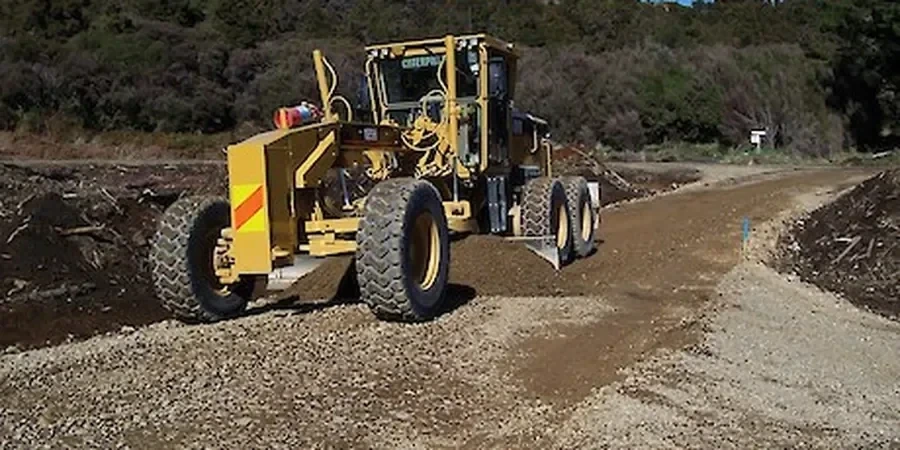
A subgrade design based on soaked CBR at 95% maximum dry density is the industry benchmark for UK highways and industrial pavements.
Scope of work in Birmingham
- Plasticity Index (PI) from Atterberg limits on clay matrices.
- Soaked CBR at 4-day immersion for worst-case conditions.
- Compaction characteristics via Proctor tests (BS 1377).
Critical ground factors in Birmingham
The most frequent issue we encounter on Birmingham road projects is subgrade softening during construction. Even with a well-designed capping layer, a sudden downpour can drop the CBR of a compacted clay subgrade from 5% to below 2% within hours. This leads to pump failure under construction traffic and requires costly removal and replacement. To mitigate this, we specify a minimum dry density of 95% MDD and install a working platform of granular fill at least 300 mm thick. For particularly wet sites, we also recommend a geotextile separation layer. The cost of remedial work after a failed compaction test far exceeds the upfront investment in a detailed subgrade assessment.
This service complements our laboratory testing work for a complete project analysis.
Our services
Our road subgrade design service covers the full investigation cycle from sampling to final bearing capacity report. We adapt each stage to Birmingham's specific geology and project scale.
Site Investigation & Sampling
Trial pits and dynamic sampling to retrieve undisturbed tube samples for CBR and classification testing. We target depths of 1.0–1.5 m below formation level.
Laboratory CBR & Compaction Testing
Soaked and unsoaked CBR tests per BS 1377-4, plus Proctor compaction curves. Results delivered with design modulus recommendations for flexible and rigid pavements.
Pavement Design Support
We interpret subgrade parameters into layer thicknesses using TRL Road Note 29 and AASHTO methods. Includes sensitivity analysis for worst-case moisture scenarios.
Q&A
What is the typical CBR value for subgrade soils in Birmingham?
For the Mercia Mudstone and glacial till deposits common across Birmingham, soaked CBR values range from 3% to 8% at 95% MDD. Sandy or gravelly pockets can reach 12%, while high-plasticity clays may drop below 2% after prolonged wetting.
How much does a road subgrade design study cost in Birmingham?
A standard investigation with CBR testing, Atterberg limits, and compaction curves typically ranges from £910 to £2,380 depending on the number of test points and access conditions. Larger highway projects with multiple boreholes cost proportionally more.
What is the difference between soaked and unsoaked CBR for pavement design?
The soaked CBR simulates worst-case moisture after rainfall or groundwater rise, which is critical for UK highways. Unsoaked values are typically 2–4 times higher but are only used for temporary works or sealed pavements where moisture ingress is prevented.
Do I need a full ground investigation for a minor road or car park?
Even for light-traffic pavements, a minimum of two test pits with CBR and classification testing is advisable. Without data, you risk over-design (wasting material) or under-design (leading to premature rutting or cracking). A small investment here avoids much larger repair costs.