Birmingham’s geology, shaped by glacial till and river terrace deposits, presents distinct challenges for foundation design. The city’s variable clay layers, from the stiff Mercia Mudstone to softer alluvial pockets, demand precise measurement of compressibility. An oedometer consolidation test quantifies how much and how fast a soil layer will settle under load. This data is critical for high-rise developments in the Jewellery Quarter or infrastructure along the Rea Valley. Before finalising your foundation solution, engineers often pair this test with a capacidad de carga study to verify bearing capacity against long-term settlement.
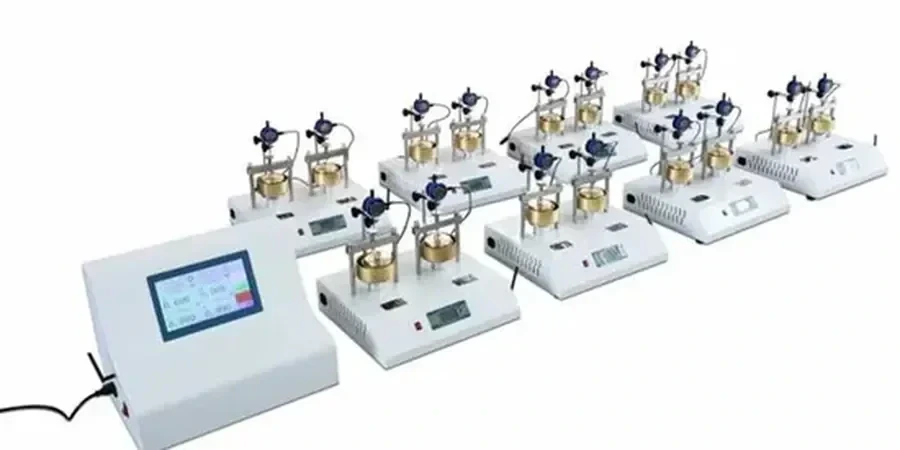
A single oedometer test can reveal decades of settlement behaviour, guiding foundation design from Birmingham’s clay plains to its reclaimed canal basins.
Scope of work in Birmingham
Critical ground factors in Birmingham
Birmingham’s legacy of industrial activity left variable fill and soft alluvial deposits along canals and former railway lands. These zones are prone to differential settlement. A common failure occurs when designers assume uniform soil without confirming compressibility via consolidation testing. The city’s high water table in areas like Digbeth further complicates drainage and settlement rates. Without oedometer data, projects risk exceeding tolerable settlement limits, leading to cracked pavements, tilted slabs, or structural distress. The oedometer consolidation test provides the baseline to avoid these costly outcomes, especially on brownfield sites. For sites with organic soils or peat lenses, the CV from oedometer tests can fall below 0.5 m²/year, meaning decades of ongoing settlement if unaddressed.
Our services
Our Birmingham geotechnical laboratory offers a full suite of consolidation testing services tailored to local ground conditions.
Standard Incremental Oedometer Test
Multi-stage loading from 12.5 kPa to 1600 kPa on undisturbed tube samples. Delivers cv, Cc, Cs, and σ'p for foundation settlement analysis. Ideal for clay sites across the Birmingham area.
Swelling and Collapse Potential Test
Modified oedometer procedure to measure heave on wetting or collapse on inundation. Critical for sites with desiccated clay or fill materials common in Birmingham’s inner-city redevelopment zones.
Constant Rate of Strain (CRS) Test
Faster alternative to incremental loading. Continuous strain application yields consolidation parameters in hours. Suitable for preliminary screening or when rapid results are needed for Birmingham’s fast-track projects.
Q&A
How much does an oedometer consolidation test cost in Birmingham?
A standard incremental oedometer test typically ranges from £190 to £410 per sample, depending on the number of load increments and whether swelling/collapse phases are required. Volume discounts apply for multiple samples from the same site. Contact us for a detailed quotation.
How long does the oedometer test take?
A standard test with 6 to 8 load increments takes approximately 7 to 10 working days, including sample preparation, saturation, and reporting. The Constant Rate of Strain (CRS) option can reduce this to 2–3 days. Urgent turnaround is available for Birmingham projects with tight deadlines.
What sample quality is required for a reliable oedometer test?
Undisturbed samples from thin-walled push tubes (U100 or equivalent) are preferred. Block samples from test pits also work well. The sample must retain natural moisture content and structure. Disturbed or remoulded samples invalidate the test for settlement prediction. Our team in Birmingham provides on-site sampling supervision to ensure quality.