Birmingham’s varied topography, from the elevated Lickey Ridge to the River Rea valley, creates distinct debris flow hazards that catch developers off guard. The city sits on a mix of Triassic sandstone and glacial till, but steep slopes in areas like Harborne and King’s Heath can mobilise loose colluvium after heavy rain. Unlike the Welsh valleys or Scottish Highlands, Birmingham’s debris flows are typically shallow, fast-moving, and triggered by intense summer storms rather than prolonged wet spells. That difference matters because the runout path and deposition zone change dramatically with soil type and antecedent moisture. We combine field mapping, historical records, and numerical modelling to quantify the hazard. Before any new cut or fill, we recommend integrating this analysis with a proper drainage geotechnical study to manage surface water that often initiates the failure.
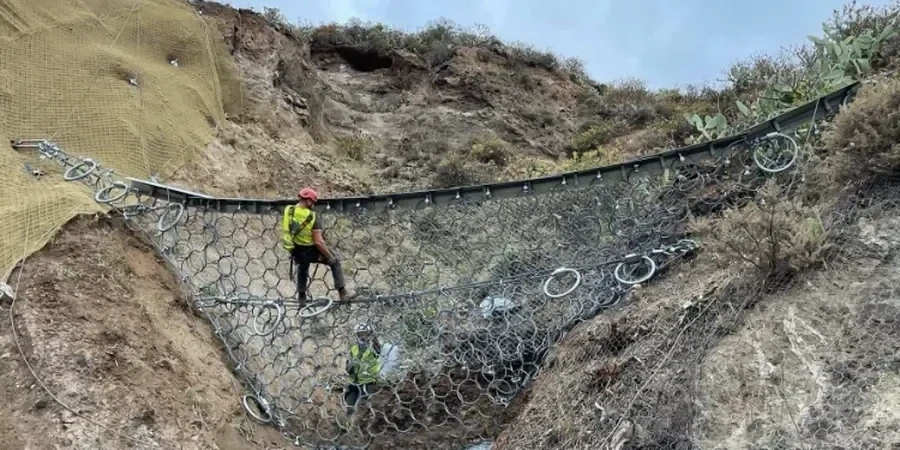
Shallow, fast-moving debris flows in Birmingham’s Triassic sandstone require site-specific runout modelling, not generic landslide assumptions.
Scope of work in Birmingham
Critical ground factors in Birmingham
A real scenario: a 15-home development on the slopes of Moseley Golf Course. The contractor excavated a cut without debris flow analysis, and three weeks later a heavy storm mobilised a 200 m³ flow that reached the new road alignment. Fortunately no one was hurt, but the remediation cost exceeded £120,000 and delayed the project by five months. In Birmingham, debris flows are not as rare as many assume. The British Geological Survey records at least 12 significant events in the West Midlands since 2000. Ignoring the hazard means accepting that risk, and the financial consequences can far outweigh the cost of a proper study upfront.
This service complements our laboratory testing work for a complete project analysis.
Our services
Our debris flow analysis service in Birmingham covers the full spectrum from desk study to detailed design support. Each assessment is tailored to the site's geology and topography.
Hazard Identification and Desk Study
Review of historical records, BGS maps, and LiDAR data to identify potential debris flow source areas and runout paths across your site.
Field Mapping and Geotechnical Investigation
Walkover surveys, soil sampling, and In-Situ (vane shear, permeability) to characterise the colluvium and determine triggering thresholds.
Numerical Runout Modelling
Calibrated FLO-2D and DAN3D simulations to predict flow velocity, depth, and deposition zones under multiple rainfall scenarios.
Mitigation Design and Hazard Zonation
Production of hazard maps (low/medium/high) and design recommendations for check dams, debris basins, or slope reinforcement.
Q&A
How much does a debris flow analysis in Birmingham cost?
For a typical residential development up to 2 hectares, the cost ranges between £1.060 and £3.450 depending on site complexity, modelling requirements, and the number of rainfall scenarios analysed.
What triggers debris flows in the Birmingham area?
Most events are triggered by intense summer thunderstorms on slopes steeper than 15 degrees, where colluvium overlies Triassic sandstone. Antecedent moisture from the week prior plays a key role in mobilisation.
What British standards apply to debris flow analysis?
The primary standard is BS 5930:2015+A1:2020 for ground investigation. For design, Eurocode 7 (BS EN 1997-1:2004) applies, and the UK Landslide Framework provides guidance on hazard classification.
Do I need a debris flow assessment for every hillside site in Birmingham?
Not every site, but any development on slopes steeper than 12 degrees or with known colluvium deposits should include a screening-level assessment. Our desk study can quickly determine if detailed modelling is necessary.