Birmingham's rapid expansion during the Industrial Revolution left a legacy of dense urban development over Triassic mudstones and glacial till. These formations weather into high-plasticity clays that shrink and swell dramatically with moisture changes. We see the consequences in cracked driveways, distorted door frames, and uneven floors across the city's older suburbs. Our expansive soil evaluation pinpoints the plasticity index and shrinkage potential before you commit to a foundation design. It is the same approach we apply to cimentaciones superficiales when the ground is stable, but here the clay demands extra caution. Understanding the soil's volume change is not optional when building on Birmingham's distinctive geology.
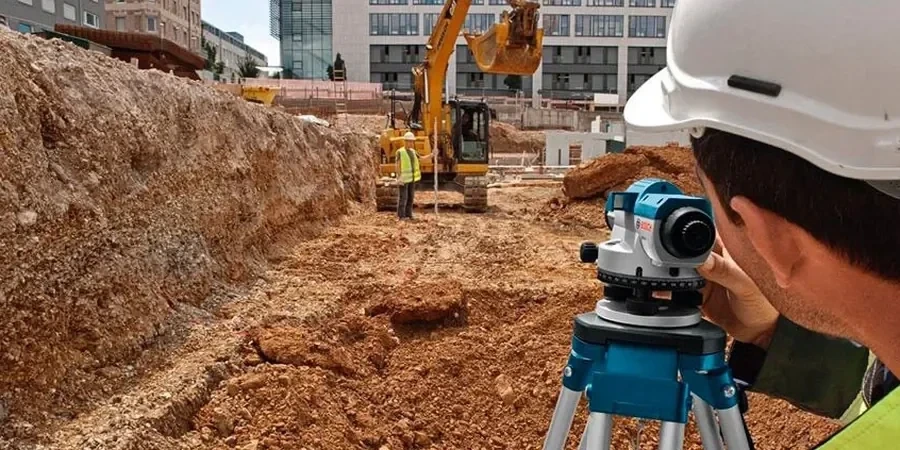
Birmingham's glacial till and mudstone clays can swell up to 8% of their dry volume — enough to lift a lightly loaded foundation several centimetres.
Scope of work in Birmingham
- Sampling at multiple depths to capture the active zone, typically 1.5 to 3 metres deep
- Atterberg limits and free swell tests to classify expansiveness
- Oedometer tests for swelling pressure under expected load
- Correlation with local records from similar sites across the West Midlands
Critical ground factors in Birmingham
Eurocode 7 (EN 1997-1:2004) requires geotechnical structures to be designed for serviceability limit states, and in Birmingham that means differential movement from clay shrinkage. BS 5930 classifies these soils as high-volume-change; ignoring that leads to foundation jacking, wall cracking, and drainage misalignment. Our evaluation quantifies the risk of heave and settlement under the specific conditions of your site, not a generic regional average. We also flag the interaction with nearby trees, which can desiccate the ground and amplify shrinkage locally.
Our services
Our expansive soil evaluation in Birmingham covers two main service lines, both tailored to the local clay behaviour.
Site-Specific Swell Testing
We drill, sample, and run oedometer tests on undisturbed specimens from your plot. The report gives swelling pressure, free swell, and shrinkage limits correlated to Birmingham's typical moisture regimes.
Foundation Risk Assessment
For extensions, new builds, or underpinning projects, we combine lab data with tree survey and drainage history. The output is a practical recommendation: depth of founding, Improvement, or moisture control measures.
Q&A
How does expansive soil affect foundations in Birmingham?
Birmingham's high-plasticity clays can heave when wet and shrink when dry, causing differential movement. Lightly loaded structures like house extensions are most vulnerable. Our evaluation measures the swelling pressure and active zone depth so your engineer can design foundations that accommodate or isolate that movement.
What tests are included in an expansive soil evaluation?
We run Atterberg limits (plasticity index), free swell index, and one-dimensional oedometer swell tests under load. For deeper assessment, we also measure linear shrinkage and suction. All tests follow BS 5930 and BS 1377-2.
How much does expansive soil evaluation cost in Birmingham?
A standard residential evaluation — sampling two boreholes with full lab testing and a report — ranges from £460 to £1,410. Larger sites or deeper active zones may increase the cost. Contact us for a quote specific to your plot.
Can you evaluate soil after a dry summer when cracks are visible?
Yes, and that is actually the best time to assess maximum shrinkage potential. We take undisturbed samples at depth to capture the desiccated state, then re-saturate them in the lab to measure the full heave capacity. The report will note moisture conditions at the time of sampling.