Birmingham sits on a mix of glacial till Mercia Mudstone and river terrace deposits, so the ground conditions beneath former quarries and low-lying areas vary significantly. When those sites become landfills, the old fill layers themselves introduce new geotechnical challenges — variable compaction, ongoing settlement, and gas generation. For any new development on or near a historic waste cell, a dedicated landfill geotechnics investigation is essential to confirm whether the ground can support loads without excessive differential settlement or gas migration. The team starts with a desk study of historical Ordnance Survey maps and borehole logs, then moves to trial pits and rotary boreholes to characterise the waste and natural strata beneath. A densímetro de cono de arena test on the capping layer helps verify the achieved compaction levels before construction proceeds.
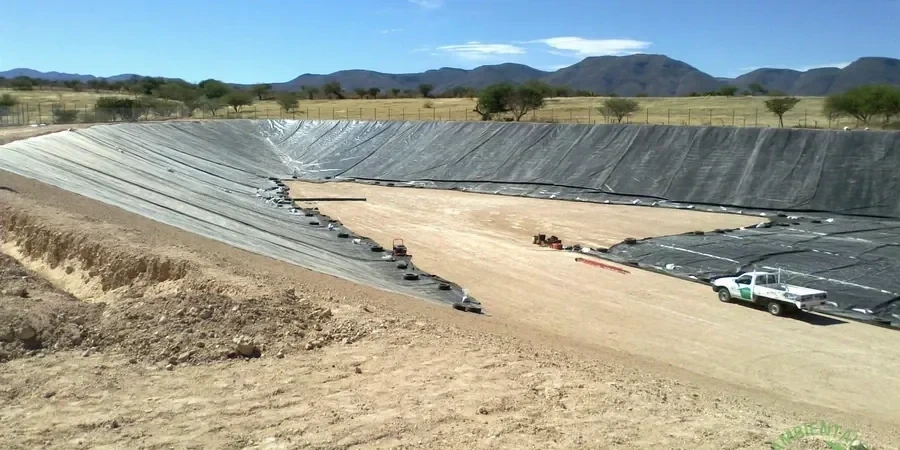
Legacy landfills in Birmingham often sit on glacial till, requiring careful characterisation of both waste and natural ground to avoid differential settlement.
Scope of work in Birmingham
Critical ground factors in Birmingham
Birmingham has over 200 known closed landfills, many unlined and with no gas control. The main geotechnical risk is differential settlement caused by the heterogeneous nature of the waste — soft organics next to rigid demolition rubble. This can tear capping layers and damage gas extraction pipes. Another concern is slope instability on the waste mound itself, especially after heavy rainfall typical of the West Midlands. A slope stability analysis using the Bishop method with waste shear parameters from a corte directo test reduces the likelihood of sudden failures. Without proper investigation, a new development on or next to a landfill cell may face years of remedial works.
Our services
Our landfill geotechnics services cover the full site investigation cycle, from scoping to final reporting, with UKAS-accredited laboratory testing.
Waste & Liner Characterisation
Borehole and trial pit sampling to determine waste composition, density, and shear strength. Laboratory testing of mineral liner permeability and geomembrane integrity.
Gas & Leachate Risk Assessment
Monitoring well installation, gas flow measurement, and leachate chemistry analysis to inform design of passive or active control systems.
Settlement & Slope Stability Analysis
Numerical modelling of long-term waste settlement and factor of safety for waste slopes, using site-specific parameters from direct shear and triaxial tests.
Q&A
How much does a landfill geotechnics investigation in Birmingham cost?
A typical site investigation for a small to medium landfill cell in Birmingham costs between £1.610 and £7.500, depending on the number of boreholes, trial pits, and laboratory tests required. The final price varies with site access, waste depth, and scope of gas monitoring.
What is the difference between a lined and an unlined landfill cell?
A lined cell has an engineered barrier — typically a clay liner or geomembrane — that prevents leachate from migrating into the underlying groundwater. Unlined cells rely on the natural geology to attenuate contaminants. In Birmingham, many older landfills are unlined, so the ground investigation must assess the risk of leachate plumes in the underlying Mercia Mudstone.
How long does a landfill geotechnics investigation take?
A standard investigation for a closed landfill in Birmingham takes 4 to 8 weeks from mobilisation to final report. Drilling and trial pitting usually take 1 to 2 weeks, followed by 2 to 4 weeks for laboratory testing and analysis. Gas monitoring wells require a longer observation period — often 3 months — to capture seasonal variations.
Do I need planning permission for landfill ground investigation works?
Yes, in most cases you need prior notification or a formal planning application to Birmingham City Council before drilling or excavating on a landfill site. The Environment Agency may also require a waste exemption or permit if you plan to handle or dispose of waste materials encountered during the investigation.