Birmingham sits on a varied mix of Triassic sandstone, Mercia Mudstone, and glacial till, with over 1.1 million people living across its 267 sq km. The city’s last notable seismic event, a 2.4 magnitude tremor near Dudley in 2002, reminded engineers that even moderate shaking can be amplified unpredictably by local soil columns. That is where the HVSR microtremor survey (Nakamura method) becomes essential — it measures the fundamental resonance frequency of the ground using ambient vibrations, giving us a clear picture of how a specific site will respond during an earthquake. Before committing to deeper boreholes or expensive dynamic analyses, this passive technique can screen large areas quickly and identify zones where amplification could concentrate. Complementing this method with a [MASW survey](/masw-vs30/) to obtain shear-wave velocity profiles provides a more complete understanding of the subsurface stiffness, while a microzonification study helps map these effects across entire districts.
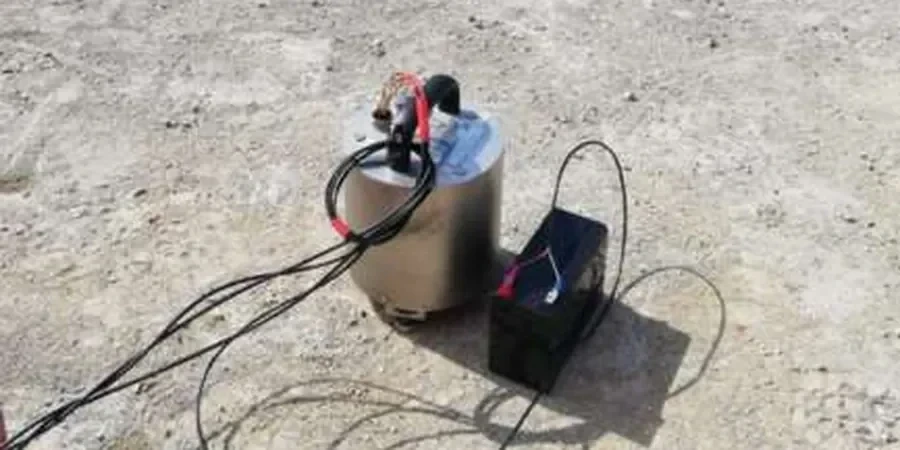
A 30-minute passive measurement at surface level can reveal the resonance frequency that defines the entire seismic design response for a high-rise building in Birmingham.
Scope of work in Birmingham
Critical ground factors in Birmingham
Birmingham’s urban expansion during the Industrial Revolution filled many natural valleys with made ground, including soft clays, ash, and demolition rubble. These heterogeneous fills can have a natural frequency that coincides with typical building resonant periods (1–5 Hz), creating a dangerous double-amplification scenario if left uncharacterised. Historical records show that the 2002 Dudley tremor caused disproportionate damage to older masonry structures built on thick alluvium along the River Rea and Tame valleys. An HVSR microtremor survey (Nakamura method) directly addresses this risk by pinpointing the site’s fundamental period so that structural engineers can tune the building’s stiffness away from that resonant range. Without this passive measurement, designers risk either over-designing foundations unnecessarily or, worse, leaving a critical frequency mismatch that could lead to non-ductile failure during a moderate event.
Our services
We provide two complementary service tiers for the HVSR microtremor survey (Nakamura method) in Birmingham, tailored to project scale and accuracy requirements.
Single-Station HVSR Screening
A rapid reconnaissance using 5–10 measurement points per site to identify predominant frequencies and potential amplification zones. Ideal for early-stage feasibility studies, large brownfield sites, or pre-tender geotechnical assessments. Each station is deployed for at least 40 minutes, and data is processed with anti-transient filtering to remove cultural noise from Birmingham’s active rail and road network.
Multi-Station HVSR Array (2D Profiling)
An array of 12–24 stations arranged along profiles to build a 2D map of resonance frequencies and amplification factors across the site. This service is recommended for critical infrastructure, high-rise developments, or projects where soil-structure interaction must be quantified. Results are integrated with borehole logs and shear-wave velocity data to produce a site-specific seismic response spectrum compliant with Eurocode 8.
Q&A
What distinguishes the HVSR microtremor survey (Nakamura method) from active seismic tests like MASW?
The HVSR method uses only ambient vibrations — no hammer, weight drop, or vibrator truck is needed. It measures the horizontal-to-vertical spectral ratio to find the site's fundamental resonance frequency, whereas MASW actively generates surface waves to produce a shear-wave velocity profile. HVSR is faster, cheaper, and works in noise-sensitive urban settings like Birmingham city centre, but it gives frequency information rather than absolute velocity. Combining both methods provides the most solid picture.
How long does an HVSR survey take for a typical residential development site in Birmingham?
For a standard 0.5–2 hectare site, a single-station screening with 8–10 measurement points can be completed in one field day. Each station records for about 40 minutes, plus setup and relocation time. Data processing and reporting usually take another 3–5 working days. Larger sites or multi-station arrays may require 2–3 field days. The passive nature of the method means there is no disruption to existing structures or traffic.
Can HVSR surveys detect soil layering and depth to bedrock under Birmingham's made ground?
Yes, the fundamental frequency (f0) measured by the HVSR method is directly related to the average shear-wave velocity and the thickness of the soil column above bedrock. In Birmingham, where made ground overlies Mercia Mudstone and Triassic sandstone, a low f0 (1–3 Hz) typically indicates thick soft deposits, while higher frequencies (5–10 Hz) correspond to shallow bedrock. However, the method provides an estimate of the resonant period, not a direct depth measurement. Combining HVSR with a single borehole or CPT sounding calibrates the frequency-to-depth relationship accurately.