Birmingham sits on a mix of glacial till, alluvium, and mudstone, so infiltration rates vary block by block. We run infiltration tests (Porchet / double-ring infiltrometer) directly on site to measure how fast water moves through the ground. This data is critical for designing soakaways, drainage blankets, and sustainable urban drainage systems. Without a reliable field test, you risk under-sized drainage or, worse, a failed infiltration basin. Our team has completed over 200 tests across the city, from the clay-heavy soils of Harborne to the sandy gravels near the Rea Valley. Every test follows BS 5930 and Eurocode 7 procedures to ensure repeatable results. Before you backfill any trench, we recommend pairing the infiltration test with a drenaje geotécnico assessment to confirm long-term performance under saturated conditions.
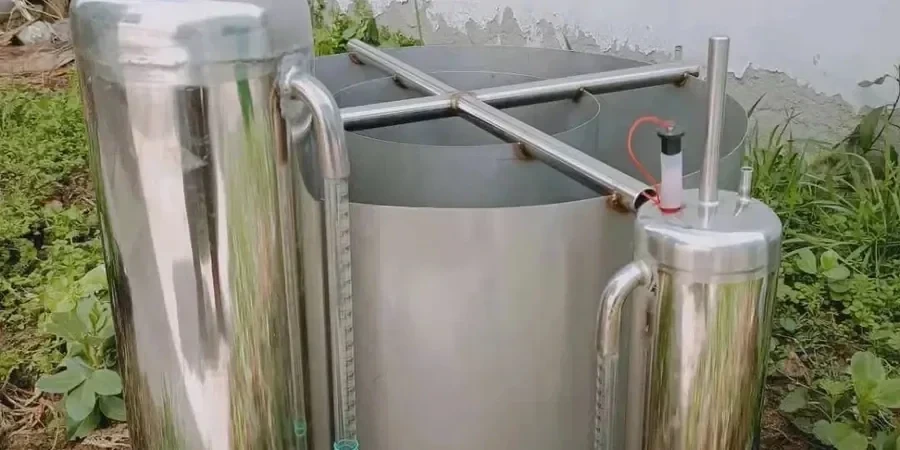
One test hole can mislead you. City soils need multiple infiltration tests at different depths to catch the real drainage story.
Scope of work in Birmingham
Critical ground factors in Birmingham
A residential development in Kingstanding used a single infiltration test from a nearby borehole and designed a soakaway that flooded within six months. The actual clay till had a rate ten times slower than assumed. We stepped in after the first storm, ran five double-ring tests across the site, and found the clay layer at 1.2 m blocked all vertical drainage. The fix required a deeper trench and a geotextile-wrapped drain system. That is why we insist on multiple tests per parcel in Birmingham. One test hole can mislead you. City soils need several infiltration tests at different depths to catch the real drainage story.
This service complements our laboratory testing work for a complete project analysis.
Our services
We offer three standard infiltration testing services for Birmingham sites. Each is tailored to ground conditions and project stage.
Porchet test (single ring)
Quick falling-head test for shallow excavations, trenches, and small soakaway design. Ideal for preliminary site assessment before detailed drainage layout.
Double-ring infiltrometer test
Full constant-head test with inner and outer rings to eliminate lateral flow. Required for soakaway sizing, SUDS approval, and greenfield runoff calculations.
Infiltration array survey
Multiple test points across a site to map spatial variability. Delivered with kriged contour maps and statistical analysis for solid design parameters.
Q&A
What is the difference between a Porchet test and a double-ring infiltrometer?
The Porchet test uses a single ring and measures falling-head infiltration, which is faster but can overestimate vertical rates due to lateral flow. The double-ring method uses an inner ring for measurement and an outer ring to buffer lateral seepage, giving a more accurate vertical infiltration coefficient. Both are recognised under BS 5930.
How many infiltration tests do I need for a soakaway in Birmingham?
BRE Digest 365 recommends at least one test per soakaway location, plus one per soil layer. For a typical residential plot in Birmingham, we advise a minimum of three tests at different depths to account for clay layers and gravel lenses. More tests reduce design risk.
Can you run an infiltration test on clay soils?
Yes, but the test takes longer because clay has low permeability. We pre-soak the ground for 24 hours to saturate the soil structure, then measure the falling head over several hours. Birmingham's glacial till often requires this extended procedure.
What does an infiltration test cost in Birmingham?
A standard Porchet test starts around £270, while a double-ring infiltrometer test with full reporting ranges from £270 to £350 per test point. Volume discounts apply for arrays of five or more tests on the same site.
How long does it take to get results?
Fieldwork takes one day for up to four test points. The laboratory analysis and reporting take two to three working days. We deliver a PDF report with raw data, corrected infiltration rate, and design recommendation.