Birmingham's soil profile is shaped by its glacial and alluvial history, with the Birmingham Fault splitting the city between Triassic sandstone to the west and Mercia Mudstone overlain by river terraces to the east. Across these varied ground conditions, achieving proper compaction is essential for foundation and pavement performance. The field density test (sand cone method) gives you a direct, in-situ measurement of soil density and compaction percentage. We perform this test in accordance with BS 1377-9, using calibrated sand and a rigid base plate to ensure repeatable results. Before placing structural fill, we often recommend combining this test with a plate load test to verify bearing capacity under actual loads, especially on the soft alluvial clays near the River Tame.
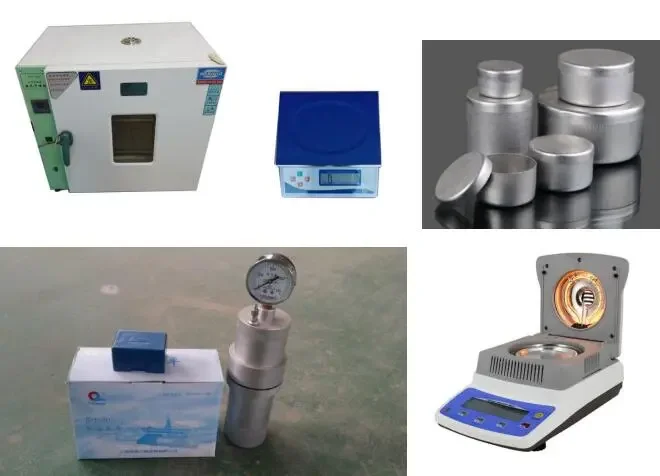
On Birmingham's variable fill layers, a single sand cone test per lift catches density gaps that rollers alone cannot guarantee.
Scope of work in Birmingham
Live process video
Critical ground factors in Birmingham
Birmingham sits at around 140 metres above sea level in the city centre, with rainfall averaging 700 mm per year. In the wetter months, the Mercian Mudstone cap can become slippery, and fill materials retain moisture longer. If compaction is verified only by a nuclear gauge or by visual inspection, you risk accepting layers that will settle or lose strength when the next storm hits. The sand cone method gives you a physical sample you can check for moisture content right there on site. Failing to meet the specified dry density — often 95% of maximum Proctor — can lead to differential settlement beneath roadways in the Jewellery Quarter or slab heave on new developments in Digbeth.
Our services
We offer the sand cone field density test as part of a wider suite of compaction control services tailored to Birmingham's ground conditions.
Standard Sand Cone Density Tests
Routine testing for fill layers, subgrades, and trench backfill. Our technician excavates the hole, collects a sealed sample for moisture content, and provides a report with dry density, moisture content, and percentage compaction relative to the project's Proctor reference.
Compaction Control for Structural Fill
Targeted testing on engineered fills beneath foundations, retaining walls, and embankments. We coordinate with your site schedule to test each lift before the next is placed, and we flag any zones that fall below the specified compaction threshold immediately.
Q&A
How much does a sand cone field density test cost in Birmingham?
For a standard test on a single lift, the price typically ranges from £70 to £140 depending on site access, number of tests per visit, and whether moisture determination is included. We provide a fixed quote per test run, so you know the cost upfront before we mobilise.
What soils can the sand cone method test in Birmingham?
It works well on fine-grained and mixed soils — silts, clays, sands, and gravels up to 50 mm particle size. For the stiff Mercia Mudstone or the sandy terrace deposits common across Edgbaston and Moseley, the method gives reliable results. Very coarse fills or dry, loose sands may need alternative methods like the nuclear gauge.
How many sand cone tests do I need per lift or per area?
A common rule of thumb for highway earthworks in the UK is one test per 1000 m² per lift, but your specification may require more. For structural fill under a building pad in Birmingham, we often advise one test per 500 m² per lift to catch localised soft spots. We can help you design a testing frequency that meets BS EN 1997-2 requirements.
How does the sand cone method compare to a nuclear density gauge?
The sand cone method is a direct measurement — you physically remove and weigh the soil — so it is not affected by surface moisture or organic matter like a nuclear gauge can be. It also gives you a sample for moisture content verification. The trade-off is speed: a sand cone test takes about 20 minutes per hole, while a gauge gives instant readings. We often use both in combination on large Birmingham sites.