Ground investigation in Birmingham forms the essential first step for any construction or civil engineering project, providing critical data on the physical and chemical properties of the soil and rock beneath a site. This category encompasses a range of intrusive and non-intrusive techniques designed to characterise ground conditions, assess geotechnical parameters, and identify potential hazards such as contamination, unstable ground, or high groundwater. In a city experiencing significant regeneration—from the HS2 rail network to extensive urban housing schemes—understanding subsurface conditions is not merely a regulatory requirement but a fundamental risk management tool that safeguards structural integrity and project viability.
Birmingham's geology is notably complex, shaped by its position on the Birmingham Fault and its diverse superficial deposits. Much of the city centre and surrounding areas are underlain by the Triassic Bromsgrove Sandstone and Mercia Mudstone Group, which can present challenges such as variable weathering profiles and the potential for dissolution features. Overlying these solid formations are Quaternary glacial tills, sands, and gravels, along with alluvial deposits in the river valleys of the Rea and Tame. Critically, large parts of Birmingham are also affected by historical industrial activity, resulting in made ground of variable thickness and composition, which often contains contaminants and obstructions. A robust investigation strategy, incorporating methods like the Standard Penetration Test (SPT) and Cone Penetration Test (CPT), is therefore indispensable to map this heterogeneity accurately.
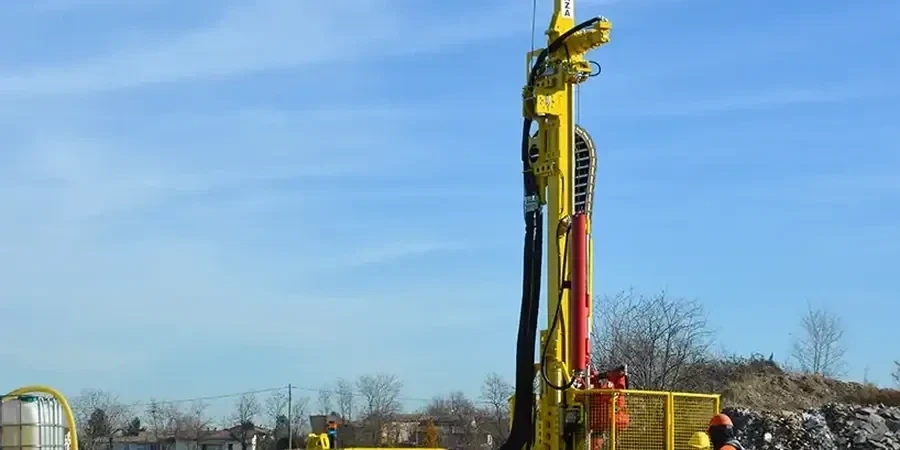
All ground investigation work in Birmingham must comply with the rigorous framework of British Standards and industry guidance. The primary standard is BS 5930:2015+A1:2020, the Code of Practice for Ground Investigations, which sets out comprehensive procedures for investigation planning, fieldwork, sampling, and reporting. For projects involving potentially contaminated land, an investigation must follow the risk-based approach detailed in the Environment Agency's Land Contamination Risk Management (LCRM) guidelines. Additionally, Eurocode 7 (BS EN 1997-2:2007) governs geotechnical design and requires the derivation of characteristic values from investigation data. Adherence to these standards, along with CDM 2015 regulations for health and safety, ensures that investigations are legally defensible and technically sound.
The range of projects requiring comprehensive ground investigation in Birmingham is exceptionally broad. Major infrastructure works, such as the HS2 Curzon Street Station and associated tunnels and viaducts, demand extensive deep investigation programmes. High-rise residential and commercial developments in the city centre rely on detailed geotechnical profiles for foundation design, often utilising in-situ testing like CPT to assess bearing capacity and settlement characteristics. For smaller-scale housing extensions or retaining wall construction, an exploratory test pit can provide a rapid and cost-effective means of visually inspecting shallow ground conditions and locating buried services. Furthermore, any development on a former industrial or brownfield site—commonplace across the Black Country fringe—mandates a thorough contaminated land assessment as part of the planning process.
Q&A
Why is a ground investigation legally required before starting a development in Birmingham?
A ground investigation is mandated under the Building Regulations 2010 and local planning policy to demonstrate that a site is stable, suitable for its intended use, and free from unacceptable contamination risks. Birmingham City Council requires this information to discharge planning conditions, ensuring developments comply with BS 5930 and the National Planning Policy Framework, thereby protecting both the public and the environment.
What is the typical scope of a ground investigation for a Birmingham brownfield site?
The scope typically follows a phased approach outlined in LCRM and BS 5930. A Phase 1 desk study reviews historical maps and environmental data. This informs a Phase 2 intrusive investigation, which commonly combines exploratory pits, SPTs, and CPTs to sample made ground and natural strata, along with chemical testing for common urban contaminants like heavy metals, hydrocarbons, and asbestos.
How does Birmingham's local geology influence the choice of investigation methods?
The variable Mercia Mudstone and glacial till cover require methods sensitive to both cohesive and granular soils. CPT is excellent for profiling soft alluvial clays and sands in the river valleys, while SPT is preferred in the weathered mudstone to recover samples and measure density. Exploratory pits are crucial for inspecting the heterogeneous made ground prevalent across the city's industrial legacy areas.
What are the main risks of conducting an inadequate ground investigation?
An inadequate investigation can lead to unforeseen ground conditions such as buried obstructions, variable bearing capacity, or perched groundwater, causing foundation failures, costly redesigns, and significant construction delays. On contaminated land, it poses serious health risks to future occupants and can result in legal liability under Part 2A of the Environmental Protection Act 1990 for the landowner.