Birmingham sits on a mix of glacial till, Keuper Marl, and river terrace deposits. The city's elevation averages around 140 meters above sea level, with the underlying Mercia Mudstone Group creating distinct challenges for anchor design. A properly designed active or passive anchor system must account for the variable strength and stiffness of these strata. Before specifying bond lengths or tendon loads, we always correlate with site-specific ground investigation data. For shallow zones where near-surface soils govern, a plate load test helps validate the assumed bearing and friction parameters used in anchor capacity calculations.
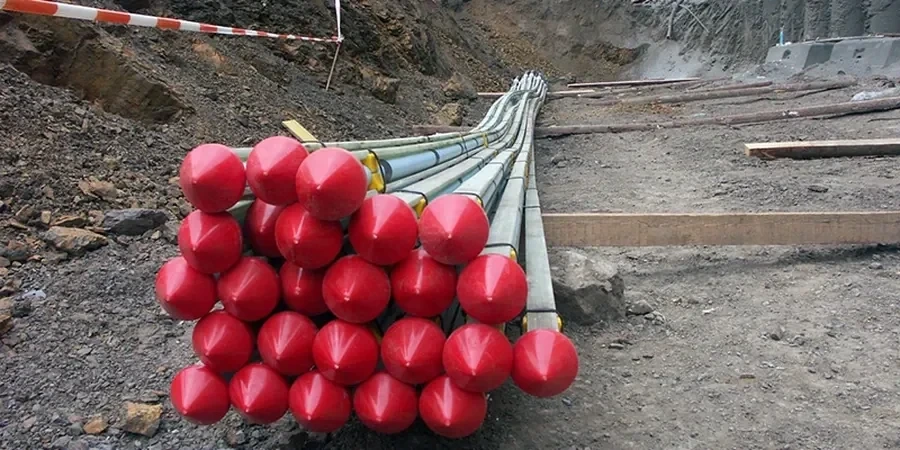
Anchor bond length in Mercia Mudstone can vary by a factor of two depending on weathering grade. Design must reflect local variability.
Scope of work in Birmingham
- Undrained shear strength for temporary passive anchors in cohesive soils.
- Friction angle and interface roughness for permanent active anchors in mudstone.
- Corrosion potential and groundwater aggressiveness per BS EN 1997-1:2004.
Live process video
Critical ground factors in Birmingham
A common mistake in Birmingham is assuming that all glacial till behaves like a dense granular soil. In reality, the local till often contains lenses of soft clay or silt that reduce side friction drastically. If a passive anchor relies on full bond along the entire length, those weak lenses can cause creep and long-term displacement. We have seen retaining walls shift several centimeters because the anchor design did not account for these thin, low-strength layers. A rigorous site investigation with continuous sampling is the only way to catch them before construction.
Our services
We offer two complementary anchor design services tailored to Birmingham's ground conditions.
Active Anchor Design
For permanent tie-backs and slope stabilization. We calculate tendon loads, bond lengths, and lock-off loads using factored soil parameters from site-specific testing. Corrosion protection and long-term creep are evaluated per BS EN 1537.
Passive Anchor Design
For temporary excavation support and foundation restraint. Design focuses on ultimate bond stress in cohesive soils and short-term pullout capacity. We verify assumptions with field pull-out tests before full installation.
Q&A
What is the difference between active and passive anchors?
Active anchors are pre-tensioned after installation to apply a compressive load on the soil or structure. Passive anchors are not pre-loaded; they resist movement only after displacement begins. Active anchors are common for permanent works in Birmingham, while passive anchors suit temporary shoring.
How much does anchor design cost in Birmingham?
A typical anchor design package for a medium-sized project in Birmingham ranges from £860 to £2,960. This includes load calculations, bond length verification, and a design report. Final cost depends on the number of anchor types and complexity of ground conditions.
What ground conditions in Birmingham affect anchor capacity most?
Weathered Mercia Mudstone and glacial till with clay lenses are the two main variables. Mudstone weathering grade controls bond strength, while till lenses can reduce side friction. A proper ground investigation with SPT and CPT is essential to avoid overestimating capacity.