Birmingham sits on a patchwork of solid Keuper Marl and unpredictable pockets of made ground left by two centuries of heavy industry. The contrast between the stable sandstone ridges and the soft, compressible fills in the Digbeth and Saltley basins makes collapsible soil evaluation a non-negotiable step before any foundation design. When a dry, apparently competent loam suddenly loses its structure after rainfall or a burst water main, differential settlement can crack a new slab within weeks. That is why the team here runs a full metastability assessment on every site underlain by anthropogenic deposits or windblown silt. For sites where the collapse potential is borderline, we cross-check results with a classification of soils to confirm the exact mineralogy, and when the fill layer exceeds three metres we also recommend a density test with sand cone to map void ratios in the compacted zone.
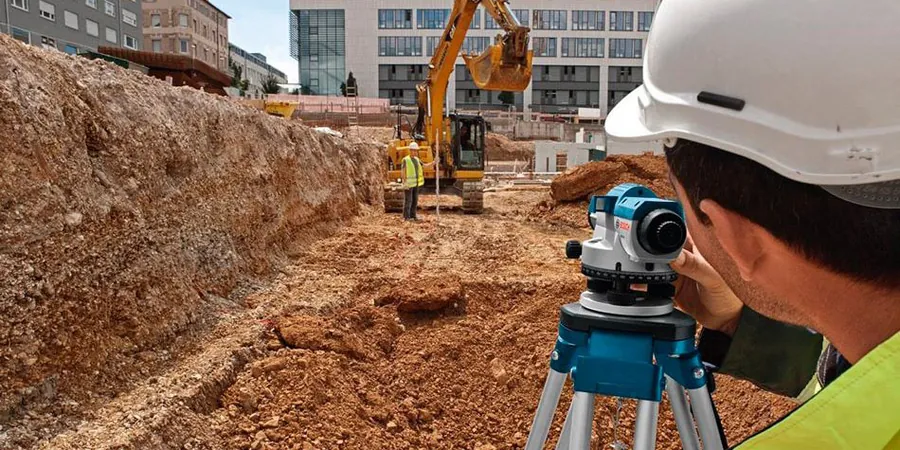
A dry loam that holds a 200 kPa load can lose 80% of its strength within hours of wetting—that is the hidden risk of collapsible ground in Birmingham.
Scope of work in Birmingham
Live process video
Critical ground factors in Birmingham
The drilling rig used for these evaluations in Birmingham is a track-mounted Dando Terrier that can reach 8 metres through stiff clays and rubble. Its continuous flight auger is swapped for a Mazier core barrel when we hit the collapsible horizon, because disturbed samples give false collapse indices. The rig works best on the flat, contaminated ground of former industrial plots in Nechells and Tyseley, but access becomes tight in the narrow streets of the Jewellery Quarter. On those sites we switch to a portable hydraulic corer that fits through a standard doorway, though the depth is limited to 4.5 metres. Either way, the team logs every spoonful of fill with a visual description of particle angularity and organic content, because Birmingham's old tips can include anything from ash to leather offcuts.
Our services
We offer two focused evaluation packages tailored to Birmingham's mixed geology and made-ground legacy.
Double-Oedometer Collapse Test
Laboratory test on undisturbed samples to determine the collapse index under in-situ and flooded conditions, following BS 5930 and BS 1377-5. Results classify the soil as non-collapsible to severely collapsible.
In-Situ Moisture Conditioning & Fill Mapping
Field programme combining trial pitting, dynamic cone penetration, and pocket penetrometer tests to map moisture-sensitive zones across the site. Includes a collapse potential contour plan for foundation layout optimisation.
Q&A
What makes a soil collapsible in the Birmingham context?
Collapsible soils in Birmingham are typically loose, dry fills or windblown silts that have a high void ratio and a small amount of clay binder. When the binder dissolves or softens on wetting, the particle skeleton collapses, causing sudden settlement. Made ground from the city's industrial past—especially ash and slag—is particularly prone to this behaviour.
How much does a collapsible soil evaluation cost in Birmingham?
A standard evaluation for a residential plot in Birmingham ranges from £650 to £1,870, depending on the number of boreholes, sample disturbance requirements, and whether laboratory double-oedometer tests are needed. Larger commercial sites with multiple fill zones may fall at the upper end of that band.
Can collapsible ground be built on without removal?
Yes, if the collapse potential is moderate (2-5%), the ground can be improved by deep compaction or pre-wetting and surcharging. For higher collapse indices, removal and replacement with engineered fill is safer. The evaluation report will recommend the appropriate Improvement technique based on the collapse index and the structure's tolerance to differential settlement.
What is the difference between a collapsible soil test and a routine compaction test?
A routine compaction test measures the dry density achieved after mechanical effort, while a collapsible soil test evaluates how the natural soil structure behaves when wetted under load. The double-oedometer test specifically isolates the collapse component from normal consolidation, something a standard Proctor or field density test cannot do.