The West Midlands clay and glacial till sequence in Birmingham creates a tricky setting for water flow. Rain here is frequent, and the city’s dense urban fabric means groundwater behaviour is rarely uniform. That is exactly why field permeability tests matter. A Lefranc or Lugeon test tells you how fast water moves through the soil or rock mass at a specific depth. Without that data, drainage designs, retaining walls, and even temporary excavations can fail. In Birmingham, we have seen projects where assumed permeability was off by an order of magnitude. That leads to delays and cost overruns. Running a field permeability test early in the investigation avoids those surprises. We complement this with a drainage geotechnical study to map preferential flow paths across the site.
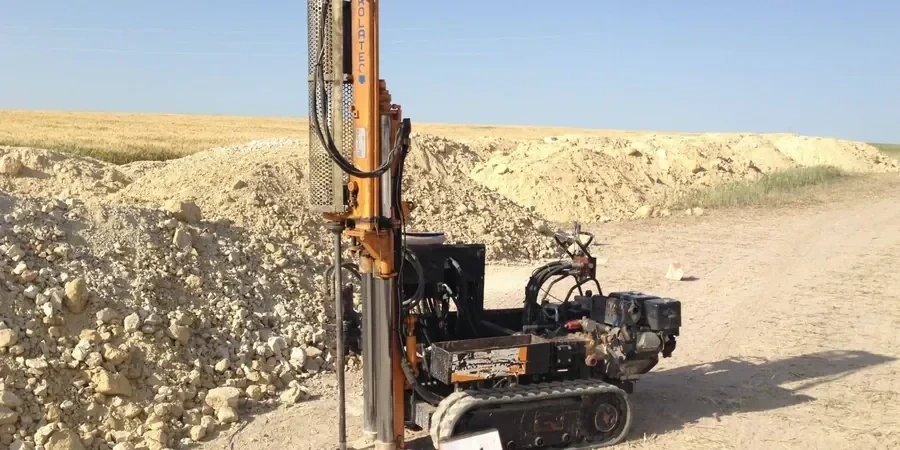
In Birmingham, a single Lefranc test can change the whole dewatering strategy for a basement excavation.
Scope of work in Birmingham
Critical ground factors in Birmingham
What we notice most in Birmingham is that many ground investigations stop at borehole logging and SPT. They skip the permeability test. Then, when the excavation hits a water-bearing sand lens, the pumps are undersized and the sides start slumping. That is a real risk in the Triassic sandstone and glacial deposits around the city. A field permeability test costs a fraction of a dewatering redesign. It also tells you where to install relief wells or grout curtains. In our experience, skipping this step is never worth the gamble.
This service complements our laboratory testing work for a complete project analysis.
Our services
We offer two main field permeability testing options tailored to Birmingham's ground conditions.
Lefranc Permeability Test
Constant or falling head test in a borehole with single or double packers. Suitable for low-permeability soils, glacial tills, and weathered rock. We measure the water flow and compute the coefficient of permeability (k) in m/s. The test is performed in accordance with BS 5930 and includes a full hydrograph analysis.
Lugeon Water Pressure Test
Step-pressure injection test in rock masses. We apply increasing pressure stages (e.g. 0.5, 1.0, 1.5 bar) and record the water take per metre. Results are expressed in Lugeon units (1 Lugeon = 1 litre/minute/metre at 1 MPa). Ideal for fractured sandstone, limestone, and mudstone sequences found in the Birmingham area.
Q&A
How much does a field permeability test cost in Birmingham?
Typical cost ranges from £500 to £860 per test, depending on depth, test type (Lefranc vs Lugeon), and number of packer stages. The price includes mobilisation, on-site testing, and a full report with k-values. For multiple tests on the same site, we offer a discounted rate.
What is the difference between Lefranc and Lugeon tests?
The Lefranc test is used in soils and weathered rock using a constant or falling head method. The Lugeon test is designed for rock masses and applies step-pressure increments to evaluate joint permeability and flow behaviour under stress. Choose Lefranc for clay/till and Lugeon for fractured bedrock.
How long does it take to get results from a field permeability test?
Field testing takes 2 to 4 hours per test location. The full report, including hydrographs and permeability interpretation, is delivered within 5 to 7 working days. If you need preliminary data faster, we can provide a field summary within 24 hours.