Geophysics in Birmingham plays a critical role in understanding the subsurface conditions that directly influence the safety, design, and cost-efficiency of construction and engineering projects. As a non-invasive investigative discipline, it encompasses a suite of advanced techniques used to map underground features, assess ground stability, and determine the physical properties of soils and rocks without the need for extensive excavation. In a city with a dense industrial legacy and ongoing regeneration, the application of methods like GPR (Ground Penetrating Radar) survey and MASW / VS30 (shear wave velocity) profiling is essential for de-risking developments from the outset.
Birmingham's geological setting presents a complex tapestry that makes geophysical investigation particularly valuable. The city is largely underlain by the Triassic Mercia Mudstone Group, with significant drift deposits including glacial tills, sands, and gravels from the Quaternary period. These superficial deposits can be highly variable in thickness and composition, often concealing buried channels, abandoned mine workings from the Black Country coalfield periphery, and dissolution features in underlying gypsum. This variability creates a challenging ground model where traditional intrusive site investigation alone may miss critical hazards, making techniques such as seismic tomography (refraction/reflection) indispensable for creating a continuous subsurface picture between boreholes.
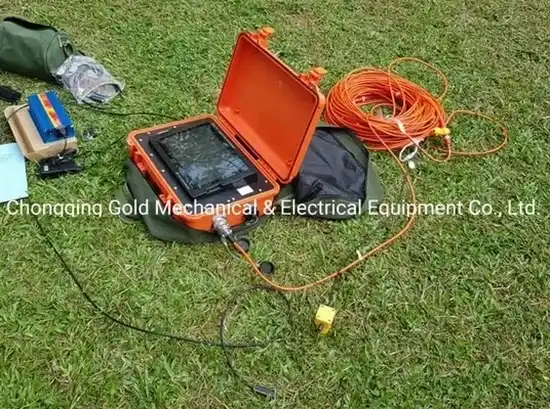
Regulatory compliance in the UK, and specifically within the West Midlands, is a key driver for geophysical surveys. The primary standard governing this work is BS 5930:2015+A1:2020, the code of practice for ground investigations, which recognizes geophysical methods as a fundamental part of a phased site investigation strategy. For projects involving seismic risk, the assessment of shear wave velocity (VS30) to determine ground type is aligned with Eurocode 8 (BS EN 1998) and the UK National Annex, a necessity often addressed through MASW / VS30 surveys. Furthermore, the planning process, guided by Birmingham City Council, frequently requires detailed coal mining risk assessments and ground stability reports, where geophysical data can be pivotal in satisfying conditions and securing building control approval.
The range of projects requiring geophysics in Birmingham is extensive, reflecting the city's mix of heritage and high-rise ambition. Major infrastructure schemes like the HS2 rail terminus at Curzon Street have relied heavily on geophysical data to navigate complex ground conditions and buried structures. Dense city-centre commercial developments, including the construction of tall residential and office towers, routinely employ HVSR microtremor survey (Nakamura method) techniques to cost-effectively determine the fundamental site period and assess seismic resonance risks. Similarly, the redevelopment of former industrial 'brownfield' sites, a staple of Birmingham's regeneration, depends on geophysics to locate buried foundations, storage tanks, and potential contamination pathways, ensuring safe and sustainable land reuse.
Q&A
What is the main purpose of a geophysical survey in a construction project?
The primary purpose is to non-invasively investigate subsurface conditions to identify potential hazards, such as voids, variable rockhead, or buried structures, before intrusive work begins. This creates a continuous ground model that complements borehole data, reducing the risk of unforeseen ground conditions that can cause costly delays and design changes.
How does the geology of Birmingham affect the choice of geophysical methods?
Birmingham's geology, with its variable glacial drift deposits overlying Mercia Mudstone and potential for shallow mine workings, demands a multi-method approach. For instance, seismic refraction is effective for mapping bedrock depth beneath loose superficial layers, while GPR is better suited for locating shallow buried objects and cavity detection in the near-surface.
What UK standards govern geophysical ground investigations?
The primary standard is BS 5930:2015+A1:2020, the code of practice for ground investigations, which details the application of geophysical techniques. For seismic site classification, Eurocode 8 (BS EN 1998-1) and its UK National Annex are key, requiring the measurement of the shear wave velocity (VS30) of the ground to assess its behaviour during an earthquake.
When is an HVSR microtremor survey required instead of a traditional seismic survey?
An HVSR survey is often required in urban environments where traditional active-source seismic methods like MASW are restricted by space, noise, or vibration concerns. It uses passive ambient noise to measure the site's fundamental resonance frequency, which is crucial for earthquake engineering design in areas with deep sediment fill or for tall, vibration-sensitive structures.