Geotechnical laboratory testing forms the backbone of safe and cost-effective construction across Birmingham and the wider West Midlands. This category encompasses a comprehensive suite of index, strength, compaction, and consolidation tests designed to characterise soils and aggregates recovered from site investigations. In a city undergoing rapid regeneration—from the HS2 Curzon Street terminus to large-scale residential developments in Digbeth and Perry Barr—understanding ground conditions through rigorous lab analysis is not optional; it is a fundamental requirement to mitigate risks associated with variable and often challenging subsurface materials. Our Birmingham-based laboratory provides the full spectrum of tests, including fundamental classification procedures such as Atterberg limits and grain size analysis, which together define the behavioural framework of fine and coarse-grained soils respectively.
The geology beneath Birmingham is dominated by the Triassic Mercia Mudstone Group, interbedded with sandstones and overlain by complex Quaternary drift deposits of glacial till, glaciofluvial sands and gravels, and alluvium along the River Rea and its tributaries. These superficial deposits exhibit significant lateral and vertical variability, frequently containing soft, compressible clays and loose, water-bearing granular layers. The Mercia Mudstone itself, while often a competent engineering material at depth, can be weathered to a stiff, desiccated clay near the surface, prone to volume change. Accurate determination of shear strength via direct shear testing and compressibility through oedometer consolidation testing is therefore critical for foundation design and settlement prediction in the city's post-glacial landscape.
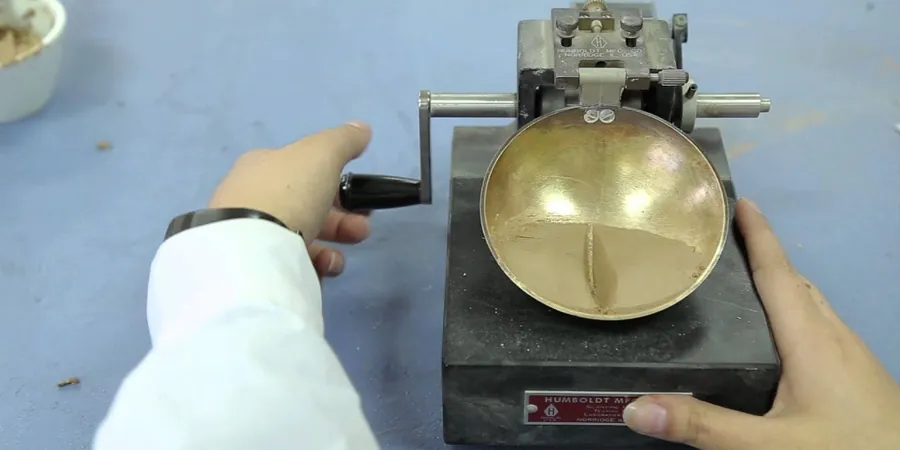
All laboratory procedures are conducted in strict accordance with British Standards, principally BS 1377:1990 (Methods of test for soils for civil engineering purposes) and BS EN ISO 17892:2014 series for geotechnical investigation and testing. Depending on the project scope, testing may also adhere to the Specification for Highway Works (SHW) Series 600, particularly for road and infrastructure projects. The laboratory CBR test remains a cornerstone for pavement design under the Design Manual for Roads and Bridges (DMRB), while permeability assessments using falling or constant head methods are indispensable for Sustainable Drainage Systems (SuDS) design, a mandatory consideration for new developments under Birmingham City Council's planning policies.
This category of testing is indispensable across a broad spectrum of projects. Deep basement excavations in the city centre rely on accurate strength and stiffness parameters to design retaining walls and prevent ground movement adjacent to sensitive structures. Highway schemes and industrial warehouse developments require Proctor compaction tests to establish specification limits for engineered fill. Residential developments on brownfield sites, prevalent across the Black Country fringe, demand comprehensive contamination and geotechnical suites, including residual soil characterization to assess the behaviour of weathered in-situ materials. Each test programme is tailored to the specific ground model, ensuring that foundation recommendations, earthworks specifications, and groundwater control measures are based on robust, repeatable data rather than conservative assumptions.
Available services
Atterberg limits
→ Ver detalleDirect shear test
→ Ver detalleGrain size analysis (sieve + hydrometer)
→ Ver detalleLaboratory CBR test
→ Ver detalleLaboratory permeability test (falling/constant head)
→ Ver detalleOedometer consolidation test
→ Ver detalleProctor test (Standard or Modified)
→ Ver detalleResidual soil characterization
→ Ver detalleSoil classification (USCS/AASHTO)
→ Ver detalleSoil mechanics study
→ Ver detalleTriaxial test
→ Ver detalleUnconfined compression test (UCS)
→ Ver detalleQ&A
What laboratory tests are typically required for a ground investigation in Birmingham?
A typical investigation in Birmingham requires classification tests such as moisture content, Atterberg limits, and particle size distribution to define the soil type. This is followed by strength tests like triaxial or direct shear, compressibility tests via oedometer consolidation, and chemical testing for brownfield sites. The exact suite depends on the geology encountered, which often includes Mercia Mudstone and glacial drift deposits.
How do British Standards govern geotechnical laboratory testing?
Geotechnical testing in the UK is governed primarily by BS 1377, which covers classification, compaction, permeability, and shear strength tests. The BS EN ISO 17892 series provides internationally harmonised methods. For infrastructure works, the Specification for Highway Works Series 600 dictates specific procedures for CBR and compaction tests to ensure consistency with national road construction specifications.
Why is laboratory testing preferred over in-situ testing for soil classification?
Laboratory testing provides controlled conditions that allow for precise measurement of index properties like liquid limit and particle size distribution. In contrast to field tests, lab tests remove variables such as moisture fluctuation and operator interpretation, yielding repeatable results essential for accurate soil description, correlation with design parameters, and compliance with UK specification requirements.
How long does a standard geotechnical laboratory testing programme take?
Standard classification tests can be completed within 3 to 5 working days after sample receipt. Consolidation and permeability tests require longer due to saturation and loading stages, typically 7 to 14 days. The overall programme duration depends on the number of samples and the complexity of the testing schedule, which is agreed upon prior to commencement to meet project deadlines.