Birmingham sits at around 140 metres above sea level, but its geology tells a more complex story — glacial till overlying Mercia Mudstone creates variable bearing conditions across the city. In neighbourhoods like Harborne and the city centre, the difference in ground stiffness can shift micropile design parameters significantly. A thorough site investigation, including boreholes with SPT and careful profiling, is essential before sizing any micropile system. The team applies Eurocode 7 partial factors calibrated to local soil variability, ensuring every micropile design in Birmingham addresses both the overburden and the underlying rock behaviour.
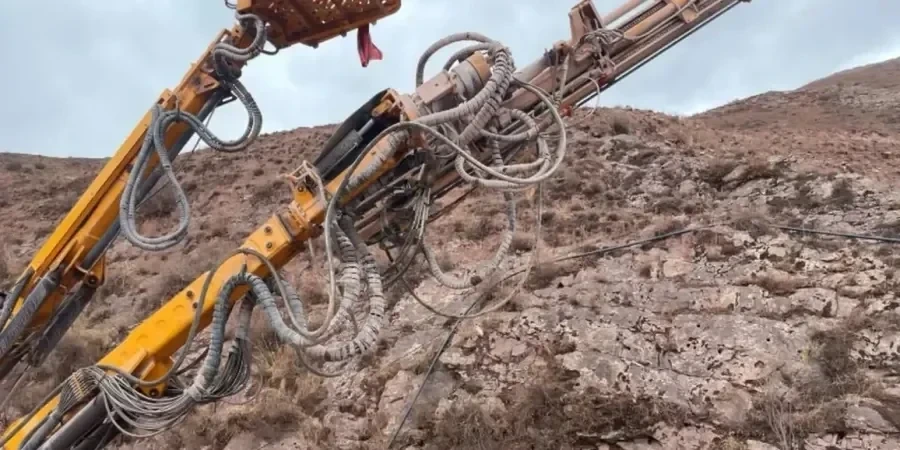
In Birmingham's variable glacial till and Mercia Mudstone, micropile design demands site-specific bond values and careful grout take estimation to avoid underperformance.
Scope of work in Birmingham
Critical ground factors in Birmingham
The humid temperate climate of the West Midlands keeps Birmingham's groundwater levels relatively high, especially after prolonged rainfall. In areas like Digbeth and the Jewellery Quarter, perched water tables within the glacial till can cause instability during drilling and reduce grout quality if not managed. Another recurring challenge is the presence of loose fill or made ground from historical industrial activity — here, micropile design must account for negative skin friction and potential downdrag loads. The team addresses these risks by specifying temporary casing and monitoring grout returns continuously during injection.
This service complements our laboratory testing work for a complete project analysis.
Our services
We offer a full range of micropile design services tailored to Birmingham's ground conditions, from initial feasibility to detailed structural design.
Feasibility and Ground Assessment
Review of existing borehole data and trial pitting to determine the most suitable micropile type — gravity-grouted, pressure-grouted, or post-grouted — based on the soil profile and groundwater regime.
Structural Micropile Design
Calculation of axial and lateral capacity using finite element methods (PLAXIS, Lpile) and limit state design per Eurocode 7. Includes steel section sizing, grout mix specification, and structural connection detailing.
Installation Support and QA
Site supervision during drilling, grouting, and load testing. Verification of bond length, grout cube strength, and pile integrity via low-strain (PIT) testing or static load tests to confirm design assumptions.
Q&A
What is the typical cost range for micropile design in Birmingham?
For a standard residential or light commercial project, micropile design fees in Birmingham typically fall between £1,290 and £3,190, depending on the number of piles, ground variability, and required testing. A detailed quote is prepared after reviewing site investigation data.
When is micropile design preferred over traditional piling in Birmingham?
Micropiles are often chosen in Birmingham for sites with restricted access — narrow alleys, basement conversions, or listed buildings where headroom is limited. They also suit ground with boulders or variable till where driven piles risk damage or refusal.
What testing confirms micropile capacity after installation?
Static load tests to 1.5 times the design working load are common, along with low-strain integrity testing (PIT) to check shaft continuity. In some cases, bi-directional (Osterberg) load cells are used when reaction systems are impractical.