Birmingham sits on a complex drift geology where glacial till, river-terrace gravels and alluvial peat pockets interlace beneath the city streets. With approximately 1.1 million residents and a post-industrial redevelopment boom, nearly every brownfield site in the Jewellery Quarter or Digbeth uncovers organic layers that demand careful handling. Our team has managed organic soil management on dozens of Birmingham projects, from the Perry Barr regeneration to small infill plots in Kings Heath. We combine site-specific peat classification with consolidation testing so you know exactly how much settlement to expect before you pour a single slab. When dealing with shallow organic horizons, we often recommend a drainage geotechnical study to lower the water table ahead of excavation, and we cross-check our findings with vane shear testing for undrained strength in soft clays.
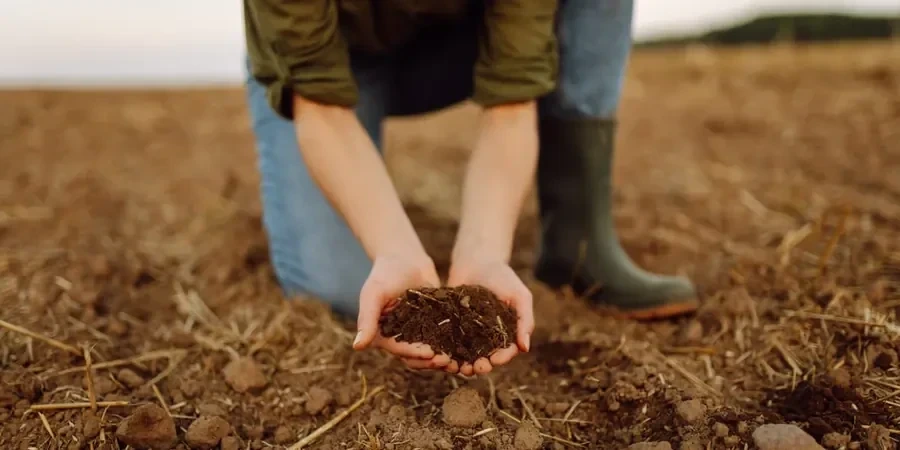
Birmingham's alluvial peat pockets can induce differential settlements of 50-150 mm without proper organic soil management and pre-treatment.
Scope of work in Birmingham
Critical ground factors in Birmingham
Birmingham's humid continental climate, with annual rainfall around 800 mm and a high water table in the floodplain zones, turns organic soil management into a race against time. If you strip peat and leave it exposed for more than a week during winter, the material can lose 30-40% of its shear strength through remoulding. Differential settlement is the biggest headache — one side of a building on gravel, the other on peat, can produce cracks that cost more than the ground treatment itself. We mitigate this with surcharging and vertical drains, and we always verify treatment effectiveness through density cone sand replacement or plate load tests before the contractor moves to sub-base.
Our services
Our organic soil management services in Birmingham are tailored to the specific peat, alluvium and soft clay conditions found across the city's brownfield and canal-side sites.
Peat & Organic Soil Classification
Full laboratory classification including loss on ignition, fibre content, pH and sulphate analysis per BS 1377. We identify peat stratigraphy using window sampling and provide an organic content profile for the entire depth of the soft layer.
Consolidation & Settlement Analysis
Oedometer and triaxial testing on undisturbed block samples to determine Cc, Cv and pre-consolidation pressure. We deliver a settlement-time curve and recommend surcharge heights or vertical drain spacing to keep post-construction movement below 25 mm.
Stabilisation Treatment Design
Mix-design trials using lime, cement or PFA to raise the CBR of organic soils to 5% or higher. We carry out ex-situ and in-situ stabilisation, verify with plate load tests, and provide a treatment specification ready for contractor pricing.
Q&A
What does organic soil management cost for a typical Birmingham residential plot?
For a small infill plot (0.1 ha) with shallow peat, expect a budget between £620 and £1,850 for classification, consolidation testing and a stabilisation recommendation letter. Larger regeneration sites with deep alluvium and multiple trial pits fall at the upper end of that range.
How deep are organic soils typically found in Birmingham?
Along the River Rea and River Tame floodplains, organic layers range from 1.5 m to 6 m thick. In the city centre and areas like Digbeth, peat pockets of 2-3 m are common beneath made ground. Window sampling to 5 m is usually sufficient to define the full profile.
Can I build directly on peat after stabilisation?
Yes, provided the stabilised layer achieves a minimum CBR of 5% and the settlement analysis shows residual movement below 25 mm. We design the treatment depth and binder content specifically for your load case. Shallow strip footings on stabilised organic soil are feasible for low-rise structures.
What is the difference between organic content and peat content?
Organic content is the percentage of material lost on ignition at 440°C per BS 1377-3. Peat is defined as organic soil with more than 20% organic content. Birmingham's alluvium often has 5-15% organic content (organic clay), while true peat pockets exceed 30-50% and require different treatment methods.
Do I need a full ground investigation or just organic soil testing?
We recommend a minimum of two trial pits or window samples per plot to confirm the lateral extent of organic layers. If the site has variable fill or previous industrial use, a full ground investigation including contamination screening is prudent. We can advise after a site walkover.