Our field crews mobilise core barrel rigs and window samplers across Birmingham to recover undisturbed samples from the city’s varied glacial till and alluvial deposits. For raft foundation design, the key parameter is the subgrade reaction modulus, which we derive from plate load tests and triaxial testing of high-quality tube samples. A typical campaign for a mid-rise block in Digbeth involves three boreholes to 15 m depth, plus in-situ permeability checks, to confirm that the mat can spread loads without excessive differential settlement. We then model the soil-structure interaction using the measured stiffness profile, ensuring the slab thickness and reinforcement match the real ground conditions. Before detailing the raft, we cross-check the stratigraphy with a trial pit investigation to verify shallow obstructions or old foundations that might alter the bearing surface.
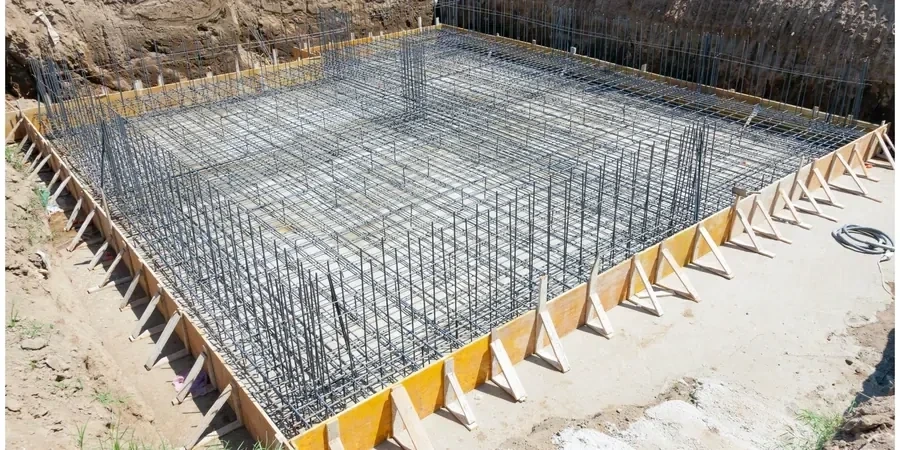
In Birmingham, the critical raft design decision is whether the stiff clay or the underlying sandstone controls the settlement — and that requires site-specific modulus values, not textbook estimates.
Scope of work in Birmingham
Critical ground factors in Birmingham
Birmingham’s rainfall averages 800–900 mm per year, and the clay soils shrink and swell markedly with seasonal moisture changes. If a raft foundation is designed during a dry summer, the clay will be desiccated and stiff, giving an over-optimistic modulus. Come winter, the same clay rehydrates, softens, and can impose hogging moments on the slab. The real risk is that without long-term moisture monitoring or a drainage layer under the raft, differential movements exceed the 25 mm tolerance. Additionally, shallow mine workings beneath the Moseley and Kingstanding areas can collapse if the raft’s load redistributes stress onto unconsolidated backfill. We always require a historical mining search and at least one borehole through the full drift sequence before finalising the mat geometry.
Our services
We provide two complementary services for raft foundation design in Birmingham, each tailored to the local ground profile and the client’s project stage.
Geotechnical Interpretative Report for Raft Design
A full factual and interpretative report combining borehole logs, laboratory test results (triaxial, consolidation, Atterberg limits), and settlement analyses. We calculate the subgrade reaction modulus at multiple depths and provide a recommended bearing stratum with factored settlements for serviceability limit state checks.
Finite Element Modelling of Raft–Soil Interaction
Using Plaxis 2D or 3D to model the raft as a plate element with non-linear soil springs derived from our field and lab data. We simulate staged construction, groundwater changes, and long-term creep in Birmingham’s glacial clays. The output includes bending moment contours, shear force diagrams, and predicted total/differential settlement contours.
Q&A
What is the typical cost range for a raft foundation design study in Birmingham?
For a standard residential or small commercial project in Birmingham, the geotechnical investigation and design report for a raft foundation typically ranges from £860 to £3,490. The final cost depends on the number of boreholes, the depth of drilling required to reach competent bearing strata, and whether advanced laboratory testing or finite element modelling is needed. We provide a fixed-price quotation after reviewing the site location and proposed building loads.
How deep do boreholes need to be for raft foundation design in Birmingham clay?
Boreholes for raft design in Birmingham’s clay should extend at least 1.5 times the raft width below the founding level, or until encountering the underlying sandstone or competent till, whichever is shallower. For a 15 m wide raft, that means boreholes to 20–25 m depth. In areas like Edgbaston or Harborne where the glacial till is thick, we often stop at 20 m because the clay stiffness increases with depth. Always check for nearby mine workings first — if present, we go deeper to confirm the void condition.
Can a raft foundation be used on Birmingham’s made ground and fill?
It is possible, but only if the fill is proven to be uniformly compacted and free from organic or degradable material. In Birmingham, many inner-city sites have historic fill from canal excavation or Victorian demolition. We require trial pits and dynamic probing to map the fill thickness and variability. A stiffened raft with deeper edge beams can bridge localised soft spots, but the differential settlement must be checked against the structural tolerances. For deep uncompacted fill, vibrocompaction or deep soil mixing before casting the raft is safer.