Birmingham sits on the Mercia Mudstone Group, a geological formation that gives the city a mix of clay and silt soils with moderate to high plasticity. With a population over 1.1 million and a road network that handles heavy daily traffic, the need for reliable soil stabilization for roads becomes clear. We see it regularly: untreated subgrades in areas like Perry Barr or the A38 corridor lead to differential settlement within five years of construction. In our lab, we focus on improving these soils through controlled mixing with lime or cement, combined with compaction testing. Before we start any stabilization program, we run a full classification of soils to determine the clay fraction and plasticity index. We also check the in-situ density using the density cone sand method to verify the existing compaction levels. That baseline data tells us exactly how much binder the soil needs.
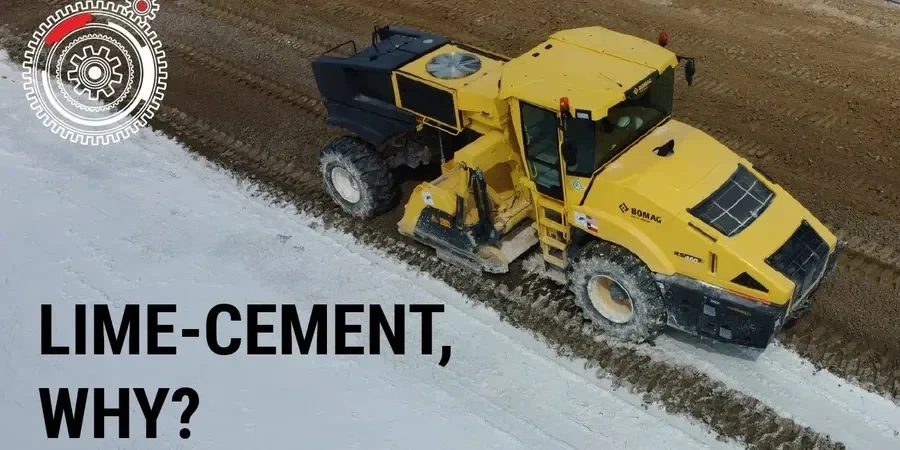
A clay with a soaked CBR below 2% can reach 12% after lime-cement stabilization — that is the difference between a failed road and a 20-year service life.
Scope of work in Birmingham
Live process video
Critical ground factors in Birmingham
Eurocode 7 (EN 1997-1:2004) and BS 5930 are the primary standards we follow in Birmingham for soil stabilization. The risk of ignoring proper stabilization is real: in a city with heavy seasonal rainfall — around 660 mm annually — untreated clay subgrades swell and shrink, causing pavement cracking and rutting. We have seen roads on the A34 corridor require full reconstruction just eight years after opening because the subgrade was never stabilized. The consequence is not just repair cost but traffic disruption across a major commuter route. Our laboratory ensures that each mix design accounts for the local clay's reactivity, avoiding the common pitfall of using too little binder and ending up with a soil that still has high shrink-swell potential.
Our services
We offer two core services for road projects in Birmingham, both backed by our UKAS-accredited laboratory.
Lime and Cement Stabilization Design
We sample the subgrade soil directly from the site, run full classification tests, and design a binder mix tailored to the clay's plasticity and moisture condition. The final mix targets a CBR of at least 8% for secondary roads and 12% for main arterial routes.
CBR Testing and Verification
After the stabilization is applied and compacted in the field, we return to take undisturbed samples and run soaked CBR tests in the lab. This confirms that the achieved strength meets the design specification. We also check the in-situ density and moisture content to ensure compaction compliance.
Q&A
How long does the soil stabilization process take for a typical road project in Birmingham?
From initial sampling to final verification, the process takes between 10 and 20 working days for most projects. This includes soil classification, mix design, and post-construction CBR testing. Larger schemes with multiple test sections may require up to 30 working days.
What is the difference between soil stabilization and soil modification?
Soil modification changes the soil's moisture and workability without significantly increasing strength — it is often used for temporary access roads. Soil stabilization, on the other hand, is a permanent treatment that raises the CBR to structural levels. In Birmingham, we almost always recommend stabilization for permanent roads because the local clays shrink and swell too much for modification alone.
How much does soil stabilization for roads cost in Birmingham?
The cost typically ranges between £740 and £2,600 depending on project size, number of test sections, and the complexity of the mix design. This includes sampling, laboratory testing, and the final design report. Larger volume projects may reduce the per-section cost.
Can soil stabilization be done on wet clay subgrades in Birmingham?
Yes, but it requires careful moisture control. If the natural moisture content is above the optimum, we recommend pre-drying the soil with lime before adding cement. In Birmingham's clay, moisture contents often exceed 25% during winter, so we plan the stabilization work during drier months or use quicklime to reduce water content first.