A common mistake we see in Birmingham is assuming shallow foundations can handle the city’s variable ground without reinforcement. The Triassic sandstone might be competent near the surface, but beneath it lie layers of soft alluvial clay and till that settle unevenly. Contractors often ignore the need for stone column design until differential movement cracks a slab. That is why we start every Birmingham project with a thorough ground investigation. Before we design a single column, we run cbr-vial tests to confirm subgrade stiffness. Only then do we size the columns to reduce total and differential settlement in weak soils.
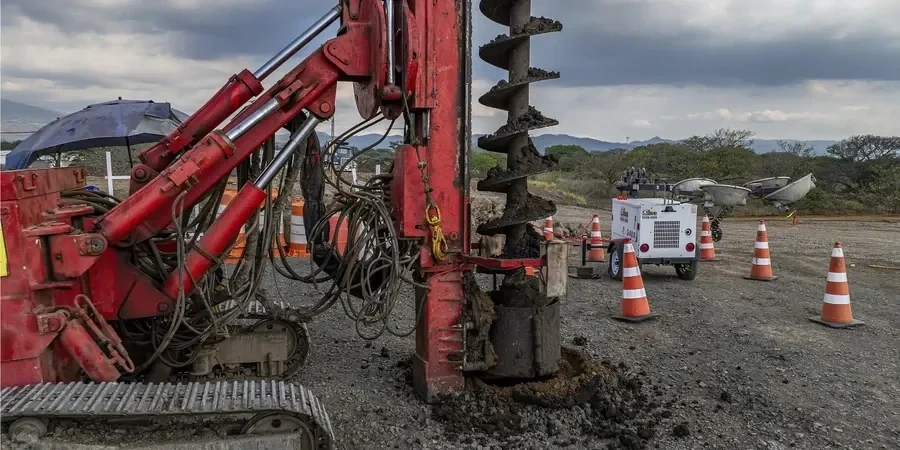
Stone column design in Birmingham requires careful assessment of lateral confinement in soft alluvium to avoid bulging failure under load.
Scope of work in Birmingham
Critical ground factors in Birmingham
Birmingham’s urban development expanded rapidly during the Industrial Revolution, often on poorly documented fill and soft ground. Many city centre sites contain buried foundations, old canal basins, and made ground that compresses unpredictably. Without proper stone column design, a structure can experience 50 mm or more of differential settlement within the first two years. This risk is especially high in areas like Digbeth and the Jewellery Quarter where historical infill is deep. A geotechnical assessment using CPT or SPT is essential to map the weak zones before any Improvement begins.
Our services
Our stone column design service covers the full workflow from site investigation to construction support. We work with civil contractors and structural engineers across Birmingham.
Load-settlement analysis
We calculate settlement using the Priebe method and finite element modelling. Output includes settlement vs. time curves and column stress ratio for any layout.
Column layout optimisation
We determine optimal spacing, diameter, and depth to meet project settlement limits. Our team uses PLAXIS 2D/3D for complex geometries.
Construction QA/QC support
We supervise stone column installation, perform in-situ plate load tests, and verify column integrity with dynamic probing. All work under UKAS accreditation.
Q&A
What is the typical cost range for stone column design in Birmingham?
The cost for design and basic geotechnical interpretation is between £1.230 and £4.320 depending on site complexity, number of columns, and required analysis depth. A full design with FEM modelling falls at the higher end.
Which soil types in Birmingham benefit most from stone columns?
Soft alluvial clays and glacial tills with undrained shear strength below 40 kPa respond best. Stone columns improve bearing capacity by 2–3 times and reduce total settlement by 50–70%.
Do stone columns help against liquefaction in Birmingham?
Birmingham is not in a high-seismicity zone, but loose saturated sands exist locally. Stone columns densify the soil and provide drainage, lowering liquefaction potential. We apply the NCEER (Youd-Idriss 2001) method when needed.
How long does a typical stone column design project take?
For a standard commercial site in Birmingham, the design phase takes 2–4 weeks from receipt of ground investigation data. Urgent projects can be expedited to 10 working days.